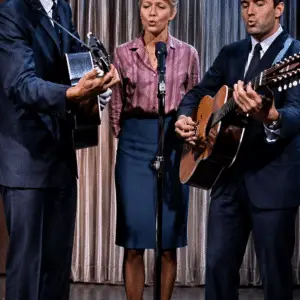
Decades later, Blue Bayou continues to resonate as one of the most emotionally powerful performances in music history. What makes the song endure isn’t just its melody—it’s the honesty embedded in every lyric and every note Ronstadt sings.
During the late 1970s, when stadium rock and high-energy performances dominated, Ronstadt offered something quieter yet far more impactful. Her delivery was controlled, almost restrained, but beneath it simmered a deep emotional intensity that made the song unforgettable. It wasn’t about vocal showmanship—it was about connection.
The influence of Blue Bayou extended far beyond its chart success. It helped pave the way for modern genre-blending, encouraging artists to experiment freely without being boxed into a single style. Many contemporary singers owe part of their artistic freedom to the path Ronstadt helped create.
Even Roy Orbison himself acknowledged that Ronstadt gave the song new life, introducing it to audiences he had never reached. That rare recognition speaks volumes about the power of her interpretation.
“Some songs are performed. Others are felt. Blue Bayou belongs to the latter.”
Today, the track remains a staple on classic playlists, films, and radio—its emotional pull as strong as ever. In just a few minutes, it captures longing, nostalgia, and hope, reminding listeners why truly great music never fades.